
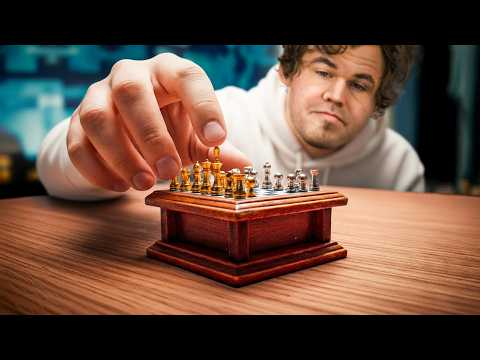
Learn Fischer Random Chess Step by Step
Fischer Random chess, also known as Chess960, reshapes the traditional opening battle by randomizing the back‑rank piece placement. This fresh twist challenges even seasoned players to think beyond memorized opening theory and focus on pure strategic skills. If you’re looking for a way to revive your love for chess while sharpening your creativity, this guide will walk you through everything you need to get started.
Below you’ll find a practical roadmap that starts with the basics, moves through intermediate concepts, and ends with a sustainable training routine. By the end of the article you’ll know exactly how to learn Fischer Random chess step by step and where to find the best resources for ongoing improvement.
What Is Fischer Random Chess?
Fischer Random chess was invented by former World Champion Bobby Fischer in 1996 as an antidote to the over‑reliance on opening preparation in classical chess. The game uses the same 64‑square board and pieces, but the placement of the bishops, knights, rooks, queen, and king on the first rank is randomized, subject to two constraints: bishops must be on opposite‑color squares and the king must be placed between the rooks to preserve castling rights.
Because there are 960 possible starting positions (hence the name Chess960), players cannot rely on deep opening libraries and must develop original plans from move one. This leads to a more balanced test of calculation, positional understanding, and adaptability.
Who Should Try Fischer Random Chess?
The variant is ideal for players who feel stuck in repetitive opening cycles or who want to improve their overall chess intuition. Beginners benefit from learning fundamental piece coordination without the baggage of opening traps, while advanced players use it to break bad habits and explore new strategic ideas.
Coaches also recommend Fischer Random for training sessions because it forces students to evaluate positions based on the actual board layout rather than memorized move orders. If you enjoy puzzles, love creative problem‑solving, or simply want a fresh challenge, Fischer Random can be a perfect fit.
Core Rules and Key Differences
Aside from the randomized back rank, the rules of chess remain unchanged: pieces move the same way, check and checkmate are defined identically, and the standard scoring system applies. The most noticeable variation lies in castling, which adapts to each starting position while still ensuring the king moves two squares toward a rook and the rook jumps over the king.
Understanding these nuances early on smooths the learning curve. The table below highlights the most important contrasts between classical chess and Fischer Random chess.
| Aspect | Classical Chess | Fischer Random Chess |
|---|---|---|
| Starting position | Fixed, identical for both sides | One of 960 possible configurations |
| Opening theory | Extensive library of named openings | Minimal theory; focus on principles |
| Castling | Standard king‑side and queen‑side | Adjusted to each random setup, still two‑square king move |
| Strategic emphasis | Opening preparation often decisive | Mid‑game and endgame skills take precedence |
Step‑By‑Step Learning Path
Step 1: Familiarize Yourself with Randomized Set‑ups
Start by generating a few random positions using an online Chess960 board. Play out the opening moves without a clock, focusing on piece development, king safety, and controlling the center. Repeating this exercise builds a mental library of typical patterns that appear across many setups.
Step 2: Master Castling Mechanics
Because castling works differently in each configuration, practice the move in every possible scenario. Use a drag‑and‑drop interface or a physical board with interchangeable pieces to see how the king and rook land after castling. Knowing the rule by heart eliminates costly mistakes in live games.
Step 3: Apply Classical Principles
Even though openings are random, timeless principles still apply: develop knights before bishops, connect rooks, and avoid moving the same piece multiple times in the opening. Write down a short checklist and reference it while you play.
Step 4: Analyze Your Games
After each session, review the game with an engine that supports Chess960. Identify moments where a standard principle was violated and note alternative plans. Over time this reflection creates a feedback loop that accelerates improvement.
Essential Tools and Platforms
Several online services now offer robust Chess960 support. Look for platforms that provide:
- Instant random position generation
- Built‑in engine analysis for Chess960
- Leaderboard and matchmaking with similarly skilled opponents
- Training modules focused on opening principles
One highly recommended option is Royal Shuffle on CH960, which combines a clean interface with advanced analysis tools, making it easy to practice and track progress.
Common Mistakes and How to Avoid Them
New players often fall into a few predictable traps. The first is over‑relying on familiar opening lines that simply don’t apply to the current setup. Instead, pause and assess the piece placement before committing to a plan.
Another frequent error is neglecting king safety because the traditional “castle kingside” shortcut isn’t always available. Treat each position as a fresh puzzle: locate the safest squares for the king early and keep a rook nearby for potential castling.
Finally, many learners forget to adjust their time management. Since unfamiliar positions can demand deeper calculation, allocate a few extra seconds per move in the opening to avoid rushed decisions.
Building a Sustainable Training Routine
Consistency beats intensity when mastering Fischer Random chess. Aim for short, focused sessions of 30‑45 minutes, three times a week. Each session could follow this structure:
- Warm‑up with 5 minutes of random position generation and quick piece development drills.
- Play two to three rapid games (5‑10 minutes per side) while applying the checklist from Step‑By‑Step learning.
- Review one game in depth with engine assistance, noting both strengths and weaknesses.
- Finish with a 5‑minute visualization exercise: set up a random position and plan the first three moves without moving any pieces.
Tracking your results in a simple spreadsheet—recording the starting position, outcome, and a brief self‑assessment—helps you spot trends and see tangible improvement over weeks.
Frequently Asked Questions
Do I need a special board to play Fischer Random?
No. Any standard chess board works; you simply rearrange the back‑rank pieces before each game. Many online platforms automate the setup for you.
Is Fischer Random suitable for tournament play?
Yes. There are official Chess960 tournaments organized by FIDE and national federations. The same time controls and rating systems apply.
Can I use my existing chess opening repertoire?
Only partially. While the core ideas—control the center, develop pieces—remain valid, you’ll need to adapt them to each unique starting position.